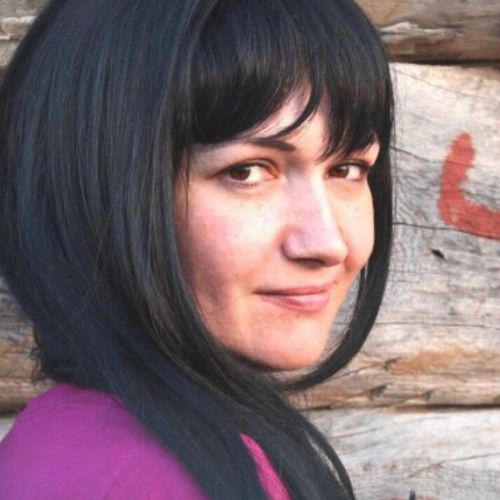
Irina Danilovich
Feodosia, Simferopol
47 yr old (born in 06.05.1979)
Address: 357910, Ставропольский край, г. Зеленокумск, ул. Почтовая д.78, ФКУ «ИК № 7 УФСИН России по Ставропольскому краю», Данилович Ирина Брониславовна, 1979 г.р.
In 2015, Irina Danilovich was actively involved in the operations of the library branch of the Ukrainian Cultural Centre. In this role, Danilovich frequently gave interviews to the publication "Krym.Realii" and expressed her love for Ukraine. She collaborated with the independent publication "INzhir Media" and the human rights project "Crimean Process." In 2020, Danilovich assumed the position of the head of the Crimean branch of the trade union Alliance of Doctors.
Even before facing criminal prosecution, law enforcement authorities subjected the nurse to pressure. In 2016, she was detained at the entrance to Crimea from mainland Ukraine, along with two other activists of the Ukrainian Cultural Centre. During this incident, the Russian Federal Security Service (FSB) interrogated them, inquiring about her travel to the mainland and her contacts. In 2017, Danilovich recounted to "Crimea.Realia" that FSB officers attempted to compel her to act as an informant. She mentioned that she was summoned without formal summons, subjected to pressure, and threatened regarding the validity of her Ukrainian passport.
Irina Danilovich went missing on April 29, 2022. She later informed the court that she had been abducted by Crimean FSB officers on that day. According to her account, she was forced into an unmarked car at a bus stop, where she was threatened, subjected to physical violence, and had her phone and tablet confiscated. After arriving at the FSB office in Simferopol, she was blindfolded with a black bag and taken inside the building.
She recalled, "Despite the black bag, I could see my feet as I entered the building. I was led through the metal detector frame, which did not react in any way."
While searching Danilovich and her belongings, a security service employee checked a case containing glasses, which later law enforcement officers would allegedly claim contained explosives. She remembered this moment clearly, as the employee took out the case, opened it, identified it as containing glasses, and checked it with a metal detector. However, according to her, there were no explosives or prohibited items in the case. Subsequently, law enforcement officers searched her residence.
Following the search, Danilovich was taken to the basement of the FSB building. She described it as cold, with constant bright lighting. She was provided with minimal food and had no access to restroom facilities. She endured these conditions for about eight days. During this time, law enforcement officers regularly visited her in the basement, threatening her life, attempting to obtain information about the "Alliance of Doctors," participants in "Crimean Solidarity," and independent journalists in the region. Danilovich also claimed to have been subjected to polygraph testing. One day, a bag containing a glasses case was taken from her, raising suspicions that prohibited items could have been planted.
Danilovich also mentioned that she was coerced into providing her consent for "operational-search measures." Authorities forcibly obtained her fingernail clippings, hand wash samples, and buccal epithelium. She was also forced to record a video statement asserting that she had not experienced mental or physical abuse. Under duress, she signed protocols and two blank sheets of paper without reviewing their content.
Following these events, Danilovich asserted that she faced physical abuse by law enforcement officers. This allegedly occurred after she was informed that explosives had been found in the glasses case. Subsequently, she was taken to an investigator, placed in temporary detention, and then transferred to pre-trial detention.
From the moment of her disappearance, Danilovich's family, friends, and a lawyer, according to their agreement, began searching for her. Her father managed to obtain surveillance footage near a petrol station, which depicted the abduction of his daughter.
In June 2022, the Department of Justice (DOJ) designated Danilovich as a "foreign agent" in the media registry.
Danilovich faced repeated extensions of her pre-trial detention, despite unsuccessful defense appeals. In August 2022, she was formally charged, and her case was transferred to Feodosia City Court.
It was later revealed that Danilovich had initially been detained on suspicion of state treason (Art. 275 of the Criminal Code) due to her alleged ties to Ukrainian intelligence. The investigation claimed that since 2018, Danilovich had been collecting data on the movement of Russian military equipment in Crimea. During her week in the FSB basement, she was persistently questioned about this, including through the use of polygraph testing. Ultimately, the charges against her did not include Art. 275 and any association with foreign intelligence services.
While in pre-trial detention, Danilovich's health deteriorated significantly. She developed otitis media but was not provided with medical treatment. As a result, she nearly lost her hearing and experienced severe headaches due to ear inflammation, according to human rights activists.
In November 2022, Danilovich reported instances of pressure from law enforcement officers who conducted an unscheduled search of her cell and confiscated her records.
During the trial, the defense repeatedly raised concerns about the judge's bias, especially when questioning witnesses, particularly the comprehensive ones. Danilovich claimed she had never seen them before, including during the search when explosives were allegedly discovered in the glasses case. The defense also highlighted numerous inconsistencies in witness testimonies, inadmissible evidence, lack of substantial proof, and perjury by one of the "witnesses," who was revealed to be a Crimean police officer. The investigation failed to clarify why the activist was carrying explosives and the source of these alleged items.
In December, during the trial's closing arguments, the prosecutor requested a seven-year prison sentence and a fine of 60,000 rubles for Danilovich. The Feodosia City Court nearly accepted this request and sentenced the activist to seven years of imprisonment and a fine of 50,000 rubles.
Danilovich's health continued to deteriorate, leading her to initiate a hunger strike in March 2023 due to the absence of medical care. In April, she was deceived into ending her hunger strike with promises of hospitalization, but she only received medical attention once thereafter.
Activists reported that there were plans to transfer Danilovich from pre-trial detention to a hospital; however, the judge scheduled a date for her to review the case materials on the same day, deliberately obstructing her access to medical care and preparations for appealing her sentence. Danilovich's father later revealed that she had almost completely lost her hearing while in pre-trial detention.
By the end of June 2023, the Supreme Court of Crimea reduced Danilovich's original sentence by one month. In July, it was announced that she would be transferred from Crimea to a correctional colony in Krasnodar to serve her sentence. In October, reports were indicating that Danilovich may have experienced a stroke while in pre-trial detention.
Irina Danilovich
will receive your letter

How to write the letter?
Getting started
It’s pretty straightforward. Just use the form above. You can choose a specific person from the directory or let Vestochka pick one at random for you.
We might know a lot about some of them, while others might only have a few details like their charges and sentences. Don’t let that stop you — your words can make a big difference, no matter how much information you have!
Some political prisoners are not listed on Vestochka: we may still be editing their profiles, they may have asked not to receive letters, they are being transferred to a new place of imprisonment or are at a place where letters cannot be delivered.
What can I write about?
Imagine you want to get to know someone. Start by introducing yourself — share a bit about who you are, what you enjoy doing, and what you do for work. Use your real name, but if you’re worried about privacy, you can pick a pseudonym.
Don’t kick off your letter with pity or overly comforting lines like «everything will be okay» or «don’t give up.» It’s fine to show you care, but only if the person is looking for that kind of support.
For your first letter, let them know why you’re reaching out. Maybe something about them caught your eye or you feel a connection. If you don’t have much information about them, just ask them to tell you more about themselves.
Share a bit about your own life — like a book you’ve read, something cool you saw on a walk, a movie you watched, or a trip you took. Share your thoughts and experiences. It’s important to give them a sense of your world. Don’t feel bad about living a full life while they’re in a tough spot; sharing your experiences can be really meaningful.
Remember, you’re talking to someone who’s in a tough situation. They have their own thoughts and feelings. Be sensitive and don’t assume what kind of letters they want. It’s best to ask them what they’re interested in and what kind of info they’d like. Some might want news, memes, interesting articles, or social media posts.
Ask questions and listen closely. This helps them open up and share their thoughts and feelings, and it helps you understand them better and connect more.
At the end of your letter, wish them well and make sure to include the date.
On censorship: what can’t I write?
When you send letters or postcards to prisoners, they’re checked by a censor. To make sure your letter gets through, keep these tips in mind:
Don’t write anything that could get the person you’re writing to in trouble. Avoid talking about the person’s criminal case. This could cause problems and might even get your letter sent to investigators. It might also cause distress for a prisoner.
Skip codes, weird symbols, or unknown abbreviations.
Stay away from swearing, insults, threats, or anything that could be seen as illegal, like calls for violence or overthrowing Putin.
Don’t include any erotic or pornographic material.
Don’t mention prison security, staff, or how to sneak in prohibited items.
Avoid making negative comments about authorities or others. Mild political opinions are usually okay.
Sometimes, poems or names might get rejected or censored in certain prisons.
Avoid overtly queer-related topics; prisoners singled out as LGBT+ can get in trouble.
Be careful with military topics: don’t talk about combat, weapons, or casualties.
These rules are just common sense — don’t put anyone in a bad spot. Follow these tips, and your letter should get through. Otherwise, the censor will likely cross out or remove anything they don’t like. Also, avoid discussing anything confidential.
Is it allowed to send photographs?
Yes, it is allowed. You can attach a photograph, drawing, meme or other images to the letter. In most penal colonies and pre-trial detention centres, only black-and-white printers are available, so colour images are printed without colour.
What language do I use in my letter?
Don’t worry if you do not write in Russian — we will translate your letter. We have already translated letters from English, French, Italian, Spanish, Portuguese, and Polish. With the help of our volunteers from around the world, we can translate letters from almost every language and make sure they reach their recipient.
Should I expect a reply and do I have to respond?
Maintaining a correspondence is more challenging than writing the first letter. But it would be wonderful if you’re able to write regularly. That way, the inmate will have a companion and someone to talk to. People who write letters consistently recommend setting reminders in their calendars. If you don’t feel up to it — that’s okay too. Even a one-time letter is a meaningful gesture and a valuable source of support.
Sometimes letters can get lost, or they might not be passed on, and the person could be moved to another region. Don’t think the person in prison is upset with you or that the communication isn’t working. Just try writing again.
Don’t start lots of similar conversations just for the sake of it or to «boost the numbers». It’s better to pick one person and focus on building a real connection. Always keep in mind the unique feedback and the relationship that develops between you.
We advise saving a copy of your letter or taking a photo of it so you don’t forget what you wrote last time. It happens. Sometimes a lot of time passes between letters.
How do I maintain the correspondence?
When someone in prison writes you a reply, we’ll send it to you by email along with a transcription and translation. To continue the conversation with Vestochka, follow the instructions in our reply email: find the person in the Vestochka directory, fill out the form again, and send your letter. We cover all the expenses. It is free for you.
How can I send letters myself?
If you want to continue writing without our help, you can use prisonmail.online. It’s a service that accepts non-Russian banking cards, but, unfortunately, not all prisons are working with it.
If you have a Russian banking card, you can send letters using F-Pismo or ZT.
When sending a letter by yourself, you have to provide the region and the number of the prison or pre-trial detention centre, the inmate’s full name and year of birth. You can enter your real phone number or simply any combination of digits. Please make sure to enter the correct details of the person you’re writing to — otherwise, the letter won’t reach them. You can find the inmate’s exact address on our website.
Please note: the reply will come as a scanned handwritten letter in Russian.
How else can I support Russian dissidents?
You can organize letter-writing events in your communities, push your representatives to focus on Russian political prisoners, welcome Russian exiles, donate and follow independent Russian media and NGOs — and much more. Just don’t forget about what is going on in Russia — do not relent and do not look away.
It says that the prisoner I was assigned was tried for terrorism, or extremism or something else scary, what’s up with that?
The Kremlin is using scary labels to justify its repression against innocent people.
Of course, a sentence for terrorism does not necessarily mean that a person is a political prisoner (unlike, for example, a sentence for «spreading fake news about the Russian army»). And yet we can say that there are at least several groupings of political crackdowns using the threat of terror as a pretext to go after innocents.
First, hundreds of people have been sentenced to long terms due to their alleged involvement in the Islamist party of Hizb ut-Tahrir — this is used primarily as a pretext for crackdowns on Crimean Tatars. The party was banned as a terrorist organization, although there is no evidence that it had any connection with terrorist activity in Russia or Crimea.
Second, the article on calls for terrorism or justification of terrorism (Article 205.2 of the Criminal Code) is considered a «terrorist» article, and is increasingly being applied to those who, due to their disagreement with the war, allow themselves to make harsh statements against the Kremlin.
Third, since the beginning of the war, the authorities have begun to regard the arson of military registration and enlistment offices as terrorist attacks, although there has not been a single case of anyone being seriously harmed by these protest arsons.
Finally, there are a number of cases in which terrorist activity, including through falsification of evidence, is attributed to opponents of the Kremlin. This is done in order to reduce their support in society and put them behind bars for a long time. The article on state treason is used in a similar manner.
I have a different question
If you have any questions or run into difficulties, we will be glad to help: write to us at info@vestochka.io. We don’t accept emails from Russian domains (yandex.ru, mail.ru, rambler.ru, etc.), as we can’t safely send replies to them.